Sunday, March 27, 2016

Noah Swart
Blog Topic
TWA – What Is It?
Mr. Moss

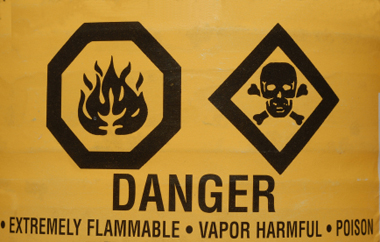
Warning Hazard

  When working, with toxic hazards, safety should always be your number one concern, and the number one concern of your employer. As the hazardous waste and chemical management field grows, more and more restrictions are being tightened to promote a safer workplace. Specifically, the chronic effects workplace toxins can have one ones health. In the past when coal mining was a booming industry profits were put ahead of laborers health and because of this a bill was passed called Occupational Safety and Health Act of 1970. This bill created the federal organization of OSHA Occupational Safety and Health Administration which was tasked with overseeing the health of all laborers in the United States workforce. OSHA later went on to pass multiple guidelines to help prevent dangers and protect the overall health of all United States worker.

  One of these guidelines is called TWA, or Time Weighted Average which was an overall guideline for toxic exposure in the workplace. TWA is the process used to calculate the exposure a worker will receive in a typical eight hour, work day. This exposure is measured in hopes of preventing any big chronic exposures, for instance, black lung in long term mine workers or radon exposure in house workers. TWA takes into account all possible levels of toxins or substances in the area at the time spent, this is done through a typical mathematical exposure calculations. A health worker may ask that a laborer wear a device to measure the amount of a chemicals in the air.


TWA Balance
  After a health worker has the right data required to make an accurate estimate of the quality of work guidelines would typically be used to determine what forms of protective measures should be used. TWA is alike in other toxin prevention methods such as Permissible Exposure Limit or PEL for short, but it differs in its formulaic way of dividing the sum of time, spent with levels of substance, present to create an easy but effective prevention method. 

Monday, March 21, 2016

Noah Swart
Blog Topic
What is OEL?

OSHA

Mr. Moss

   The American workforce is exposed to many different dangers in just a typical day to day job. This risk increases in industrial work, and chemical management. The government appointed a federal agency to monitor and prevent common work accidents from occurring. This agency is called OSHA Environmental Safety and Health Association, and although there are others that have the same intended purpose OSHA still remains the watchdog for the health of working American.

  When most people think about work related accidents they will probably think about falls, equipment malfunctions, or burns. While these accidents make up a large portion of the work force accidents they don’t account for the management of chemicals or any toxic materials, OSHA although is in charge of managing just these types of dangers. They do this through the use of OEL’s, PEL’s, and TLV’s. To start PEL stands for Permissible Exposure Limit, which is typically the amount of time you can be exposed to a concentration of hazardous materials in workplace air. This prevention method has been around for over sixty years now, and although it almost never gets the necessary exposure limit update it has set the bar for the absolute minimum of time to prevent chemical hazards.
Hazard

   As PEL is OHSA’s definition is the same as OEL’s and TLV’s they all stand for acceptable exposure limits, OEL being Occupational Exposure Limit’s and is usually the most commonly referred to limit. TLV stands for Threshold Limit Value and is the set standard for how much of a certain chemical substance a worker can be exposed to daily for a working lifetime. This limit is set to make sure the worker doesn’t retire just to discover adverse health effects that can exponentially shorten their life. These limits set an important baseline in protecting the health of the American worker, and although most government set limits are viewed as the absolute minimal an employer is required to set, it still shows a slow advancement creep to bettering the safety and health of the working world.


Sunday, March 13, 2016

Noah Swart
Blog - Dose and Response
Industrial Hygiene
Mr. Moss

   Everything in the world is toxic, all that really matters is the dosage. That is that if you consume or absorb any amount of something it can cause bodily complications and even death. Although this can be debated based on the body’s ability to reject certain things in large portions. The idea of this is Dose and Response, how much of something you take and how your body responds to it. A more commonly known factor of this is LD50, which is the measurable dose at which a toxin kills 50 percent of the population.

Basic Dose -Response Curve
   Dose is how much of something you take into your body, it’s the measurable amount. The factors can be how it’s getting into your body, whether it be through ingestion, absorption through the skin or injection. Response is how your body reacts to the substance. This can depend on your weight, genetic predispositions, and most importantly what you took. The science of Dose and Response isn’t always accurate as the Scientifics of every toxin isn’t perfectly measured, and a lot of times the LD50 can be scientifically guessed.

A more complex Dose-Response relationship chart
   Carbon monoxide is something of a household horror story and is a good example of Dose and Response. In small quantities it produces drowsiness but in large quantities it can be deadly. Dose and Response is typically measured in a Dose-Response Curve, which is a chart that shows the direct line at which the dose increases how severely the response will increase. Governmental agencies in the United States such as the Environmental Protection Agency develop very detailed guides on Dose and Response to toxins, this guide is used in the creating of corporate and industrial guidelines.


  Although Dope and Response can sometimes be a chronic determination, in the instance of exposure to radiation over a certain course of time can have different effects. If its Ionizing radiation it can even have serious mutation of both your molecules and any offspring you’re likely to create. These factors show why the measuring and constant awareness of what we put into our bodies is so important.