Sunday, April 24, 2016

Noah Swart
Blog Topic
Is blogging an effective method?
Mr. Moss

  Is blogging an effective learning method? As always the answer usually depends on who you’re asking. If I were to speak personally I would say blogging is the most effective way I learn. To me I absorbed more information through reading articles then I do through reading a very linear style textbook. This is due to the fact that I would on average read around five to six articles per blog just trying to find the right around of information necessary. This led me to learn new things I rather wouldn’t have through reading a textbook.

  Along with reading articles I really challenged myself to ordering the blogs in a proper format, along with making my newly learned thoughts understandable. This wasn’t exactly a huge challenge but it made it interesting in the large idea of things. I think that without this class I would preside to assume that all classes were a linear textbook type style. A big factor for me was how much stress blogging relieved, as I knew every week the deadline required and how I would be able to achieve that deadline. Along with this I didn’t have to worry for the cramming of information the whole week before a big final exam. In my opinion this helped both my mental health and the lingering thought of when my next big text would be and when I would have to start studying for it.  

  Of course I can’t speak for every student when I say blogging is a very effective learning style, as all people learn in a particular way. I could see an old fashion type student really enjoying the old method of textbook reading and test studying and as I can understand that opinion I would presume for them to understand where I’m coming from as well. To summarize the idea of blogging was a greatly welcomed change from the old school style of textbook learning, if I was a teacher I would use the same method. 
Noah Swart
Blog Topic
Heat Stroke Vs Heat Exhaustion
Mr. Moss

You can still experience heat
failures at the beach
  When people think of a nice hot summer day they don’t typically thing deadly. The danger however is there and can be more deadly than one thinks. The body has an amazingly self-sufficient way in cooling itself off. Most people know this as the release of sweat, and although there is a more science behind it the important thing to know is that even your body’s defense system can break down.

  The two most common forms of body cooling failure are heat stroke and heat exhaustion, to most people these are practically the same thing but they actually are very different problems. The typical symptoms of heath stoke are high fever, severe headache, dizziness, red skin, and a dangerous lack of sweating. The typical symptoms of heat exhaustion are confusion, dizziness, fainting, fatigue, muscle cramps and vomiting. If you look through a full symptoms list you’ll notice they both share very similar symptoms but are uniquely divided through the lack of sweating with heath stroke and the cramps with exhaustion. Heat stroke is typically caused by dehydration and overexposure to hot environments, one could think of a desert walk as being potentially heat stroke territory.


Choose the right day to go on a walk, never on an
excessively hot day
is usually caused by dehydration, overdressing and excessive drinking in hot environments. Now if you look at the causes for both you’ll start to think, so they’re practically the same thing right? Well it’s a lot more complicated than that, heat exhaustion is defined at the bodies’ failure to cool itself. It better words your sweating isn’t doing enough. Meanwhile heat stroke is an overexposure to a hot environment, causing an over-stress on most parts of your body. Why does water solve both these problems? Well the body utilizes water in the most effective ways, using water as an internal coolant and transferring it to sweat to cool off the outsides of the body. With water you’re almost guaranteed to dodge both heat stroke and heat exhaustion. This is important to know if you spend long days out in the sun, or just enjoy an occasional walk through the desert. 

Sunday, April 17, 2016

Noah Swart
The most popular place
for sun exposure 
Blog Topic
Effects of Ultraviolet Light
Mr. Moss


  Exposure to anything for a long amount of time is typically dangerous, but when it comes to exposure of anything remotely radioactive that’s when you come into dangerous exposure rates. Every human on earth has had exposure to the sun, which itself releases radioactive energy onto our planet. Typically in the form of UV light. This UV light plays a serious role in our ecosystem, it provides the proper heat and nutrients for plants and animals to grow. It provides Vitamin D which also helps lowering the risk of internal and colon cancer.

   Although Ultraviolet light isn’t always beneficial for those exposed to it. Overexposure to UV light can cause a lot of internal problems, the largest being the reaction to the skin. The negative effects UV light can have are quite numbered, the largest being the risk of skin cancer. Exposure to Ultraviolet radiation is the largest risk factor in most skin cancers. Natural sunlight and UV lamps can emit harmful rays that age the skin, suppress the immune system, along with the risk of skin cancer.


Trying to get closer to the radiation
   Sunburn is a sign of acute exposure to sunlight, although a sunburn won’t directly cause skin cancer it’s an early warning sign of chronic skin cancer. Skin cancer is one of the most commonly occurring cancers, largely due to the growing intensity of the sun over the life of the earth. Those constantly exposed to UV radiation will experience DNA damage which is thought to be the main cause of such cancers. Although there are numerous types of skin cancer including nonmelanoma cancers, squamous cell carcinoma and basal cell carcinoma. Skin cancer however might be the most preventable of them all. Prevention is simple, there are multiple different brands of sunscreen and UV protective that if you cover your skin properly you will be able to dramatically lower your UV radiation overtime. 

Sunday, April 10, 2016

Noah Swart
Blog Topic


Skin Disease – Warts
Mr. Moss


A pre-wart skin
   When most people think of diseases, they will think of chronic cancers or incurable problems that happen inside the body. What most people don’t know is that the largest receptor to such diseases is the same one that protects us from so many. The skin is one of the best defenses against all forms of bacteria but it itself is susceptible to such diseases. These diseases can range from deadly cancers to parasitic viruses such as warts. Skin cancer is growing to become one of the most prevalent cancers all around the world, as it shares a common activator, the sun.

   The skin itself is typically very durable, but cracks and cuts can leave the skin open to infection. One of these diseases that crawl their way into your vulnerable fission's of the skin is warts. Everyone has heart of warts, and although they can range from a variety of sub diseases the most common is Verruca Vulgaris, which is just the scientific term for the common wart. The knowledge to how warts are picked up is typically muddied by rumors and presumptions. The answer is simple warts occur in the top layer of the skin, usually picked up by bacteria on a scratch of skin. It uses the cells around it and causes a rapid growth on the outer layer of skin. This produces the common look of the wart.
 

Post wart
   Warts are actually apart of the HPV family of diseases, and there are around one hundred different types of wart viruses. Warts being a parasitic virus can last a long time and typically leach of the bloodstream of its host. Often creating connections into the blood vein that leave unsightly black looking dots all around the wart. Typically the removal of warts isn’t difficult, freezing or burning the cells of the skin where the wart is housed can do the trick. You might even get lucky and have your body’s immune system get rid of it for you. Prevention is typical common sense, good hygiene and a healthy immune system are the best prevention of warts, along with keeping your open wounds covered. 

Saturday, April 2, 2016


Noah Swart
Blog Topic
Cotton Dust
 Mr. Moss


Dust is constantly in the
air we breath (My photo)
  Our lungs are one of the most susceptible organs to damage and disease; this is due to the fact were always breathing. The air we breathe constantly isn’t really filtered all that well, leaving certain hazardous particulate matter floating around waiting for our lungs to breath it in. One of the most hazardous air particles happen to be in the form of dust, Cotton Dust. Cotton Dust has been shown to be the cause of many different diseases in the industrial workplace. The most common disease being Byssinosis also commonly known as Brown Lung Disease.

  Byssinosis is known to be caused by the presence of Cotton Dust in yarn, fabric and textile factories that lack proper ventilation. The dust can build up in the lung relatively quickly, causing tightness in chest, constant wheezing and in some cases pyspnea. In the cases of long time employees chronic effects have been found in large quantities, showing that constant exposure to Cotton Dust and the bacterial particles often associated with cotton cause major damage to the individuals health. Chronic effects usually range from reduced pulmonary function, to serious chronic bronchitis. Bronchitis becoming a growing disease in the older population, causing inflammation of the airwaves and making it extremely hard to breath.
Cotton Ball

  OHSA recently has been cracking down on more cases of the lack of proper workplace ventilation. This has helped lower the overall cases of Byssinosis but up and coming cases of both chronic and acute diseases will still show. The lack of being able to catch such a problem at the source shows the lack of proper workplace safety measures in the past, along with the lack of air quality tests. Being an indoor problem it doesn’t rank as high as some other chronic lung diseases but it still shows the necessity to always have a cautionary mindset when dealing with the air you constantly breathe.

Sunday, March 27, 2016

Noah Swart
Blog Topic
TWA – What Is It?
Mr. Moss

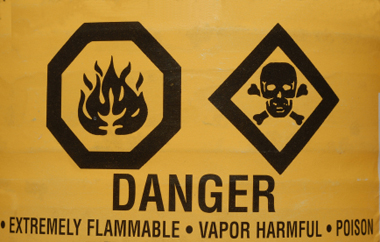
Warning Hazard

  When working, with toxic hazards, safety should always be your number one concern, and the number one concern of your employer. As the hazardous waste and chemical management field grows, more and more restrictions are being tightened to promote a safer workplace. Specifically, the chronic effects workplace toxins can have one ones health. In the past when coal mining was a booming industry profits were put ahead of laborers health and because of this a bill was passed called Occupational Safety and Health Act of 1970. This bill created the federal organization of OSHA Occupational Safety and Health Administration which was tasked with overseeing the health of all laborers in the United States workforce. OSHA later went on to pass multiple guidelines to help prevent dangers and protect the overall health of all United States worker.

  One of these guidelines is called TWA, or Time Weighted Average which was an overall guideline for toxic exposure in the workplace. TWA is the process used to calculate the exposure a worker will receive in a typical eight hour, work day. This exposure is measured in hopes of preventing any big chronic exposures, for instance, black lung in long term mine workers or radon exposure in house workers. TWA takes into account all possible levels of toxins or substances in the area at the time spent, this is done through a typical mathematical exposure calculations. A health worker may ask that a laborer wear a device to measure the amount of a chemicals in the air.


TWA Balance
  After a health worker has the right data required to make an accurate estimate of the quality of work guidelines would typically be used to determine what forms of protective measures should be used. TWA is alike in other toxin prevention methods such as Permissible Exposure Limit or PEL for short, but it differs in its formulaic way of dividing the sum of time, spent with levels of substance, present to create an easy but effective prevention method. 

Monday, March 21, 2016

Noah Swart
Blog Topic
What is OEL?

OSHA

Mr. Moss

   The American workforce is exposed to many different dangers in just a typical day to day job. This risk increases in industrial work, and chemical management. The government appointed a federal agency to monitor and prevent common work accidents from occurring. This agency is called OSHA Environmental Safety and Health Association, and although there are others that have the same intended purpose OSHA still remains the watchdog for the health of working American.

  When most people think about work related accidents they will probably think about falls, equipment malfunctions, or burns. While these accidents make up a large portion of the work force accidents they don’t account for the management of chemicals or any toxic materials, OSHA although is in charge of managing just these types of dangers. They do this through the use of OEL’s, PEL’s, and TLV’s. To start PEL stands for Permissible Exposure Limit, which is typically the amount of time you can be exposed to a concentration of hazardous materials in workplace air. This prevention method has been around for over sixty years now, and although it almost never gets the necessary exposure limit update it has set the bar for the absolute minimum of time to prevent chemical hazards.
Hazard

   As PEL is OHSA’s definition is the same as OEL’s and TLV’s they all stand for acceptable exposure limits, OEL being Occupational Exposure Limit’s and is usually the most commonly referred to limit. TLV stands for Threshold Limit Value and is the set standard for how much of a certain chemical substance a worker can be exposed to daily for a working lifetime. This limit is set to make sure the worker doesn’t retire just to discover adverse health effects that can exponentially shorten their life. These limits set an important baseline in protecting the health of the American worker, and although most government set limits are viewed as the absolute minimal an employer is required to set, it still shows a slow advancement creep to bettering the safety and health of the working world.